







THE ZEV RACE
“They stand at the unsettling crossroads between familiarity and instinct; eyes that understand us, yet gleam with something older, wilder. In them I see not a mockery of humanity, but a reminder: we were never as separate from the animal world as we once believed.” – Rosalinda Lathe, A Year Among the Tribe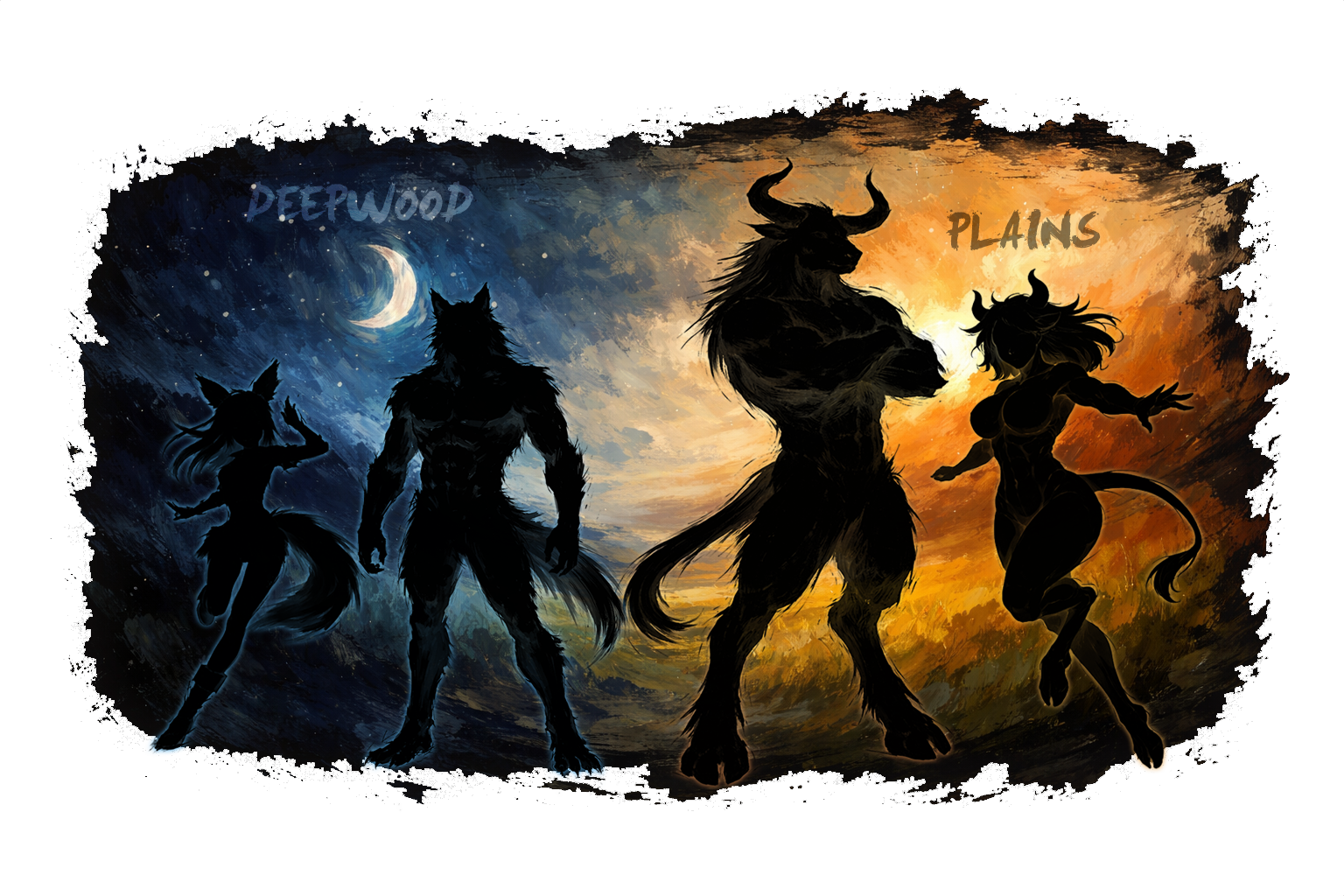
The Zev, more commonly known as Beastkin, are a humanoid race that live in tribal groups and typically practice some form of animism or ancestor worship. The physiological traits of Zev vary wildly from individual to individual, correlated with whatever ‘beast-like’ traits they possess. Zev have active libidos, and most tribes treat sex and sexuality very casually. Zev pregnancies are generally shorter than these of humans, and Zev often have multiple children per pregnancy.
It has to be said that it is extremely difficult to make definite statements regarding Zev features, lifespan, pregnancy, or mating behaviours, as they exist on a spectrum between human and animal realms. Beastkin are generally biologically compatible with both humans and with animals that they share the strongest traits with, so the results of centuries of cross breeding are difficult to classify as they’re a boiling pot of biodiversity.
Appearance-wise, female Zev retain more human features than their male counterparts, a phenomenon that is hard to explain from an evolutionary standpoint. It results in a contrast in size between male and female Zev that should theoretically cause issues in procreation and pregnancy, yet it doesn’t. Female bodies have adapted, and so happy pairings of petite females with hulking males triple their height are a common sight.
Culturally and physiologically, the Zev can largely be broken down into three groups: the tribes of the Plains, the tribes of the Deepwood, and the Loppi.
Tribes of the Plains
The Zev tribes of the Plains are more often encountered by other races as they are aggressive towards both outsiders and other tribes. They are defined by martial cultures that praise strength, honor, and glory through battle. These tribes almost exclusively contain Zev members with the traits of large diurnal animals, such as lions, buffaloes, horses, or elephants. The average male Zev from a Plains tribe is over 240cm (8′) tall when they reach adulthood.
Plains-dwelling Zev are ruled by warrior-priests who teach an animistic religion, wherein all things have a spirit. The competitive nature of these Zev seem to be based in part on their religious beliefs, where battle between warriors both feeds and pleases the spirits of the land. Much of this information comes firsthand from Zev exiles. In Plains-dweller culture, Zev born with traits that are associated with weak spirits, such as rodents and small prey – known as the Loppi – are considered to be bad omens and are often banished from their parent tribe to find homes elsewhere.
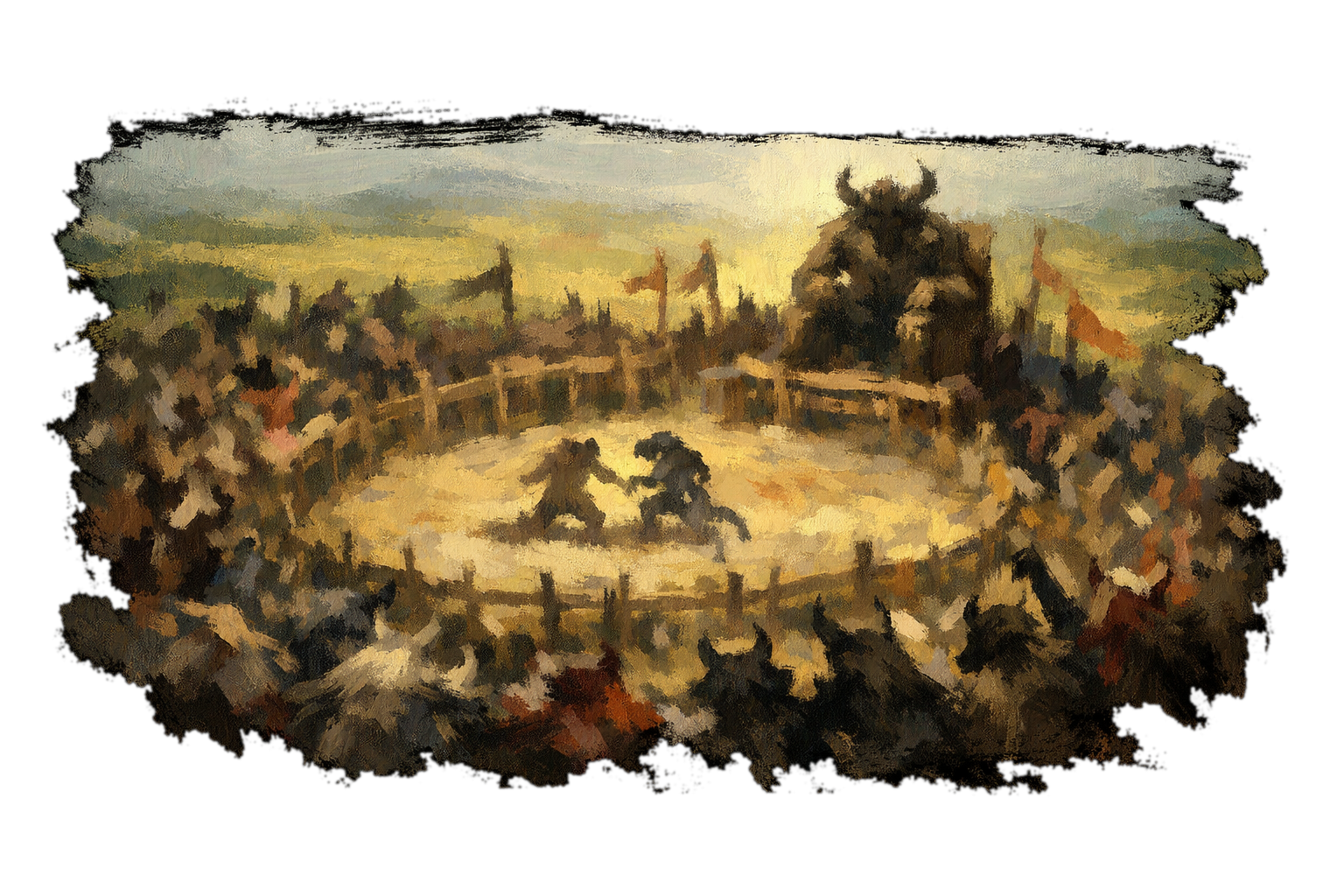
Each of the plain tribes worship their own deity – a minor aspect – typically materialized as a beast best resembling the tribe’s idealized warrior. Once a year, the tribes and their gods clash in a tournament, wherein they declare the Thra’Vesh – title for the most powerful clan. For several years in a row, that honor belongs to the Steelfang.
Steelfang is the largest tribe in the Great Plains, they are likewise the most belligerent and aggressive, which is no doubt how they ended up the largest. While many consider them little more than barbarians and raiders, they are also one of the most closely studied Plains tribes, as they have allowed academics to stay in their villages and learn of their culture in order to ‘Spread word of the greatness of the Steelfang and its invincible warriors to the rest of the world.’
The tournament for the title of Thra’Vesh ends in a ritualistic orgy, where the victorious tribe has the first selection of their mates. It is an especially great honor being selected as a mate for the dominating clan’s materialized deity, so much so that this ‘opening act’ between a “god” and a mortal is witnessed and celebrated by all attending parties. The orgy typically lasts for several days and is an opportunity for the clans to be mixed as the mated pairs migrate.
If you’re interested in the mating rituals of the Plain Tribes, dear reader, Master Rosalinda describes them in extreme detail in her book “A Year Among the Tribe”. Despite the title, her dedication for research was so great she decided to stay with the Zev tribes indefinitely.
Tribes of the Deepwood
By contrast, the Zev tribes of the Deepwood are much more reclusive in nature, often dwelling in villages built amongst the tall trees. They’re nocturnal beings, usually inheriting the traits of forest predators, wolves, foxes, big cats, and the like. These Zev believe in a type of ancestor worship, believing that their guardian spirits are their dead ancestors watching over the younger generations. Forest-dwelling Zev tribes are thus much more varied in terms of traits, as any traits are associated with an ancestor and thus something to be proud of. Compared to humans, female forest-dwelling Zev are typically shorter, standing around 165cm (5’5″) with lithe, agile builds, adept at navigating the dense woods they typically call home.
The tribal cultures of the forest dwellers are more varied than the plains-dwellers, and there are many tribes that we only have names for and little else. Others are likely so secretive that even other Zev do not know of their existence. What we do know comes largely from the few Deepwoods tribes more amenable to trade and co-operation with nearby human settlements.
Common across both cultures is a belief in guardian spirits, and that the animal traits each individual Zev exhibits are related to their personal guardians. While the existence of these guardian spirits has not been proven, some Zev priests and shamans have been observed to be very capable users of summoning magic, despite a lack of formal training. Perhaps their bond is closer with such guardian spirits, and thus they can bring them forth to fight on their behalf directly?
The biggest clan of the Deepwood is the Brighthearth. The Brighthearth tribal lands sit on the northern edge of the Deepwoods, and thus they came into contact with human settlers looking to source lumber from the dense forest more than a century ago. While initial contact was tense, the Brighthearth tribal lands were already an important region for trade amongst the Zev, as they had easy access to the nearby coastal hills where wild game and fish are both abundant. As a result, they were amenable to trade with nearby human settlements and are now Kriterra’s main source of Lifewood; a type of tree that only grows in the Deepwoods and is especially useful for the creation of magical tools.
The Loppi
Rejected by both the powerful warriors of the Plains and agile mystics of the Deepwood, Loppi are Zev outcasts. On the surface, this might seem harsh and unfair, however, as someone who has spent much time amongst the Loppi – it is completely justified.
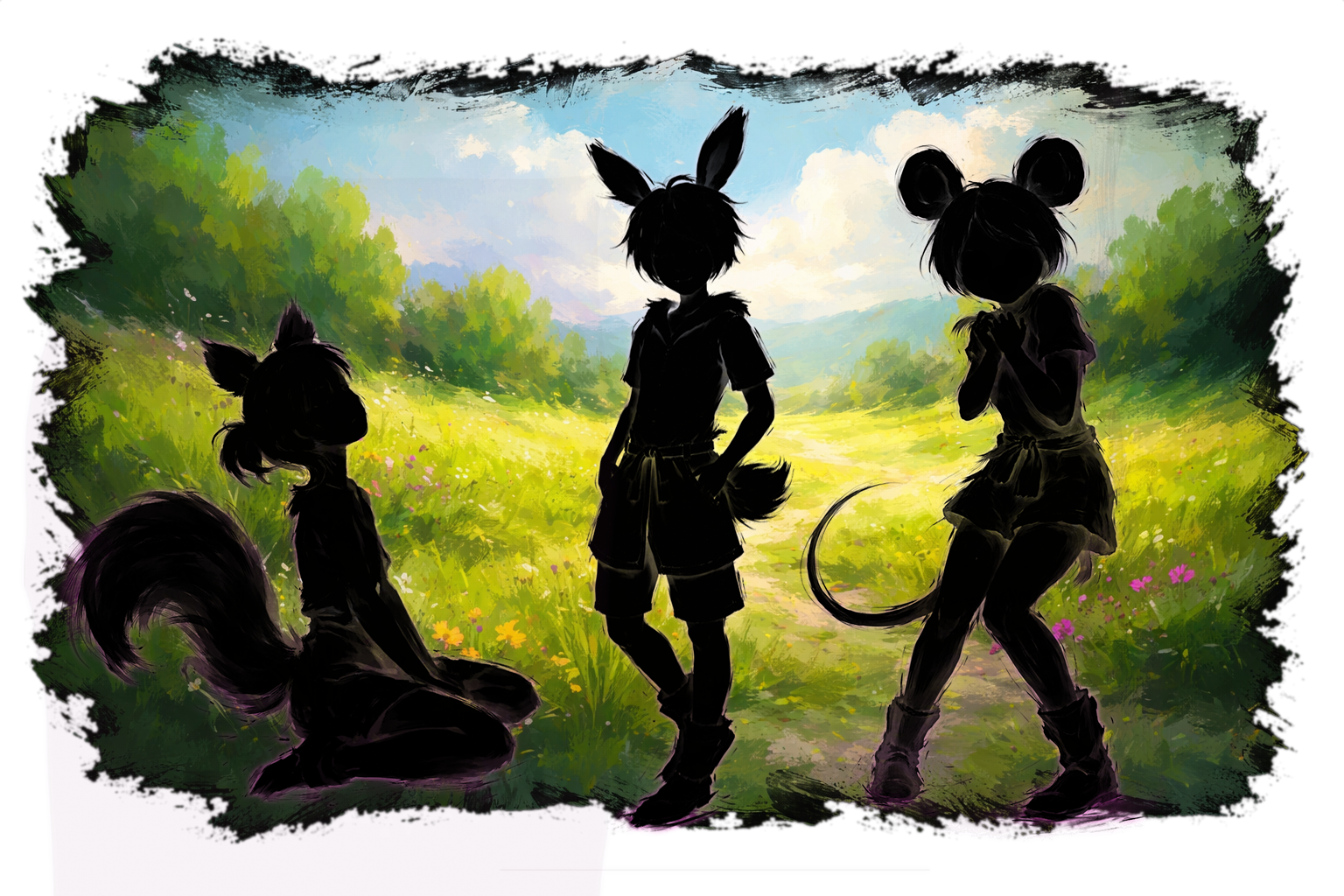
Loppi are small Zev that inherited the features of rodents and small prey; mice, rabbits, squirrels and similar. They are, cowardly, loud, low intelligence creatures best known for being constantly aroused. As a cruel joke of evolution, Loppi are biologically compatible with nearly every species, and they actively pursue that compatibility by trying to procreate with anything that moves, often in a self-destructive way.
The ability to cross-breed, along with massive libido, makes Loppi the biggest population on the disc, yet they cannot be trusted to do anything but the simplest tasks. Their ability to remember faces and names is limited, so they engrave numbers onto their skin. Loppi struggle with the concept of ownership, claiming everything is communal property, therefore keep your valuables safe when dealing with the vermin.
While Loppi are a nuisance, they are generally not a threat; they’re submissive, lack the ability to organize, and can be easily distracted by slightest stimuli. As such, they’re widely hired as expandable workforce for non-critical tasks.